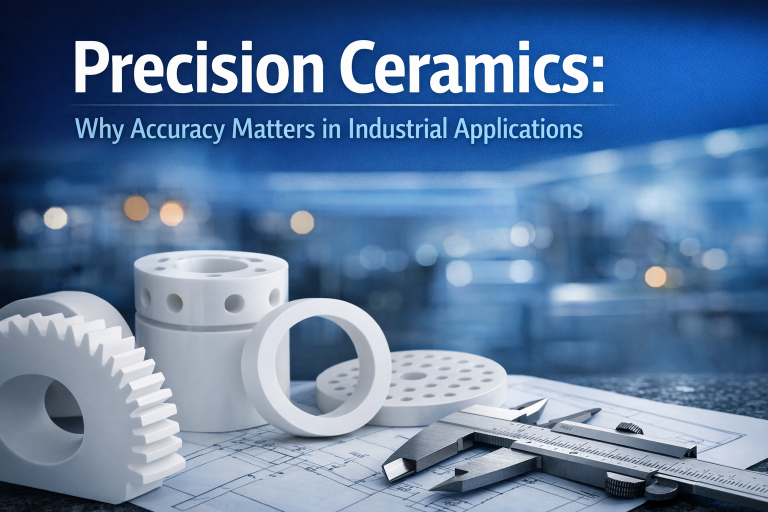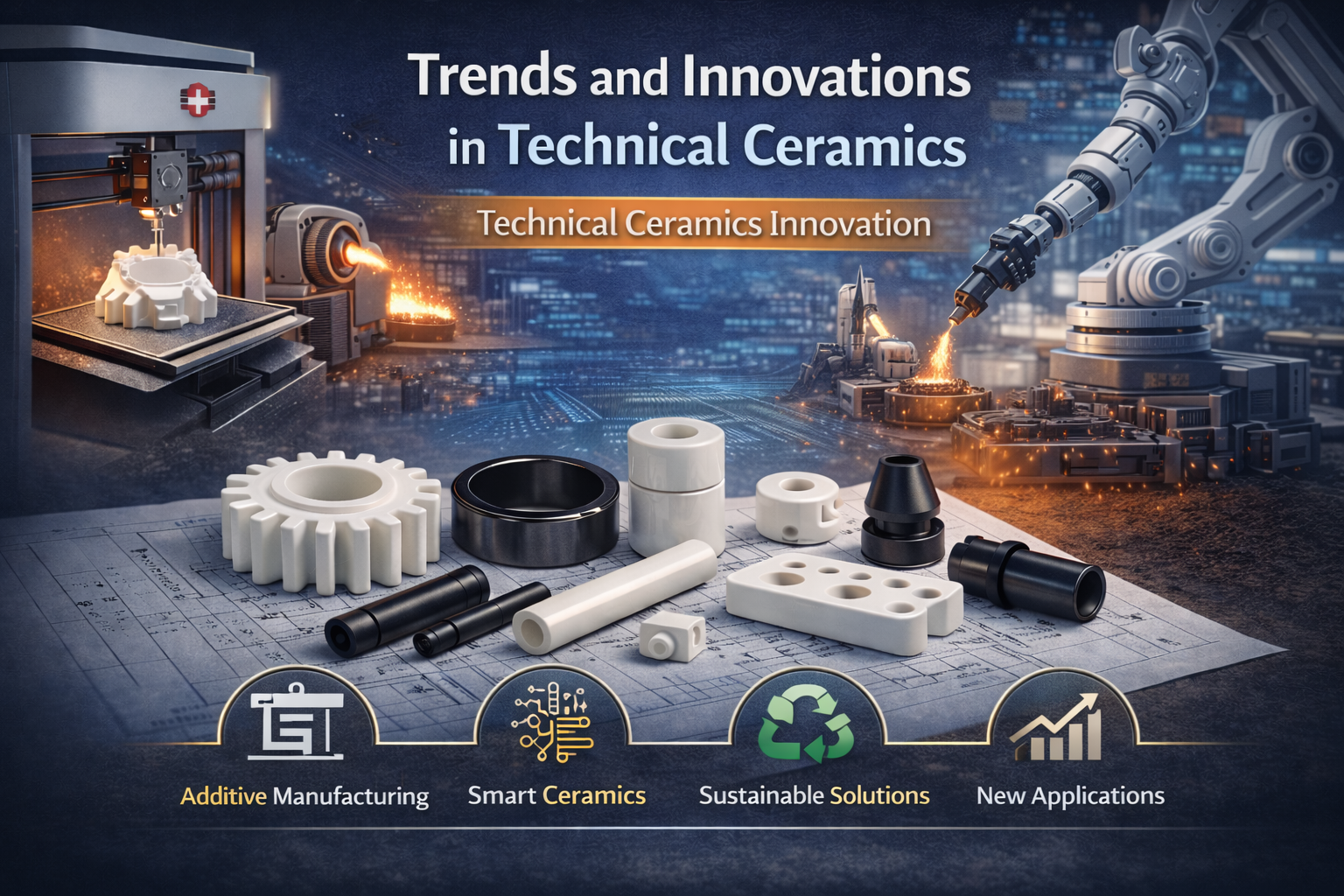
As industries continue to evolve toward higher performance, precision, and efficiency, materials innovation has become a key competitive factor. Among advanced materials, technical ceramics are gaining significant momentum due to their exceptional properties and adaptability to extreme environments.
Today, technical ceramics innovation is transforming industrial applications across sectors such as aerospace, energy, electronics, and medical technology. From additive manufacturing to smart materials, new developments are expanding the capabilities of ceramics far beyond traditional uses.
This article explores the latest trends and innovations shaping the future of technical ceramics.
1. The Evolution of Technical Ceramics
Technical ceramics have undergone major advancements in recent years, driven by improvements in material science and engineering processes.
Modern innovations focus on:
- Enhanced mechanical strength
- Improved thermal resistance
- Greater chemical stability
- Reduced structural defects
As a result, technical ceramics innovation enables manufacturers to push the limits of performance in demanding industrial environments.
2. Additive Manufacturing: A Game Changer
2.1 Complex Geometries and Design Freedom
One of the most impactful developments is the rise of ceramic additive manufacturing (3D printing). This technology allows engineers to produce complex shapes that were previously impossible or too costly to manufacture.
Benefits include:
- Design flexibility
- Lightweight structures
- Reduced assembly requirements
2.2 Faster Prototyping and Production
Additive manufacturing also accelerates development cycles by:
- Reducing lead times
- Minimizing material waste
- Enabling rapid prototyping
This aligns perfectly with the goals of technical ceramics innovation, making production more efficient and scalable.
3. Smart Ceramics and Functional Materials
3.1 Materials That Respond to Their Environment
Smart ceramics are an emerging category of materials capable of reacting to external stimuli such as:
- Temperature changes
- Mechanical stress
- Electrical signals
Examples include piezoelectric ceramics, which can convert mechanical energy into electrical energy and vice versa.
3.2 High-Value Applications
These advanced materials are increasingly used in:
- Sensors and actuators
- Medical devices
- Aerospace systems
Through technical ceramics innovation, materials are no longer passive—they actively contribute to system functionality.
4. Advances in Manufacturing Processes
4.1 Precision and Consistency
Modern manufacturing techniques allow for:
- Micron-level tolerances
- Improved repeatability
- Consistent product quality
This is essential for industries where precision is critical.
4.2 Industry 4.0 Integration
The integration of digital technologies such as:
- Artificial intelligence
- Data analytics
- Automation
is revolutionizing ceramic production. These tools optimize processes, reduce errors, and improve overall efficiency.
5. Sustainability and Eco-Friendly Solutions
5.1 Reducing Environmental Impact
Sustainability is becoming a key driver in material development. Innovations focus on:
- Energy-efficient production processes
- Waste reduction
- Responsible sourcing of raw materials
5.2 Long Lifecycle Benefits
Technical ceramics already offer long service life, which contributes to:
- Reduced replacement frequency
- Lower maintenance needs
- Less industrial waste
This makes technical ceramics innovation aligned with long-term sustainability goals.
6. Expanding Industrial Applications
Innovations in technical ceramics are opening new opportunities across industries:
- Aerospace and defense
- Renewable energy systems
- Semiconductor manufacturing
- Medical and biotechnology sectors
These industries require materials capable of performing under extreme conditions while maintaining precision and reliability.
Conclusion
Technical ceramics innovation is reshaping the industrial landscape by enabling higher performance, greater efficiency, and new application possibilities. From additive manufacturing to smart materials and sustainable production, the future of technical ceramics is driven by continuous technological advancement.
For companies seeking durable, high-performance solutions, investing in innovative ceramic technologies is no longer optional—it is a strategic necessity.